- She Films
- Posts
- rest is cute until your dreams start yelling at you
rest is cute until your dreams start yelling at you
issue 002 of the she films newsletter

Maricris Bonzo
May 13, 2025
so, how’s life?

Spring is my favorite season—and it’s been beautiful. I’ve been soaking it all in. But since the last issue… a lot has happened, and not much has been finished. I’ve made things—videos, writing, this very newsletter—but most of it hasn’t been published. It’s like I’ve been in motion but not moving forward.
Plot-wise, I went to my very first film festival (!!), visited my sister in Denver, and came back home to the Pacific Northwest.

Fun fact: this film still would not have been possible without @sam_paguio’s Laowa 10mm
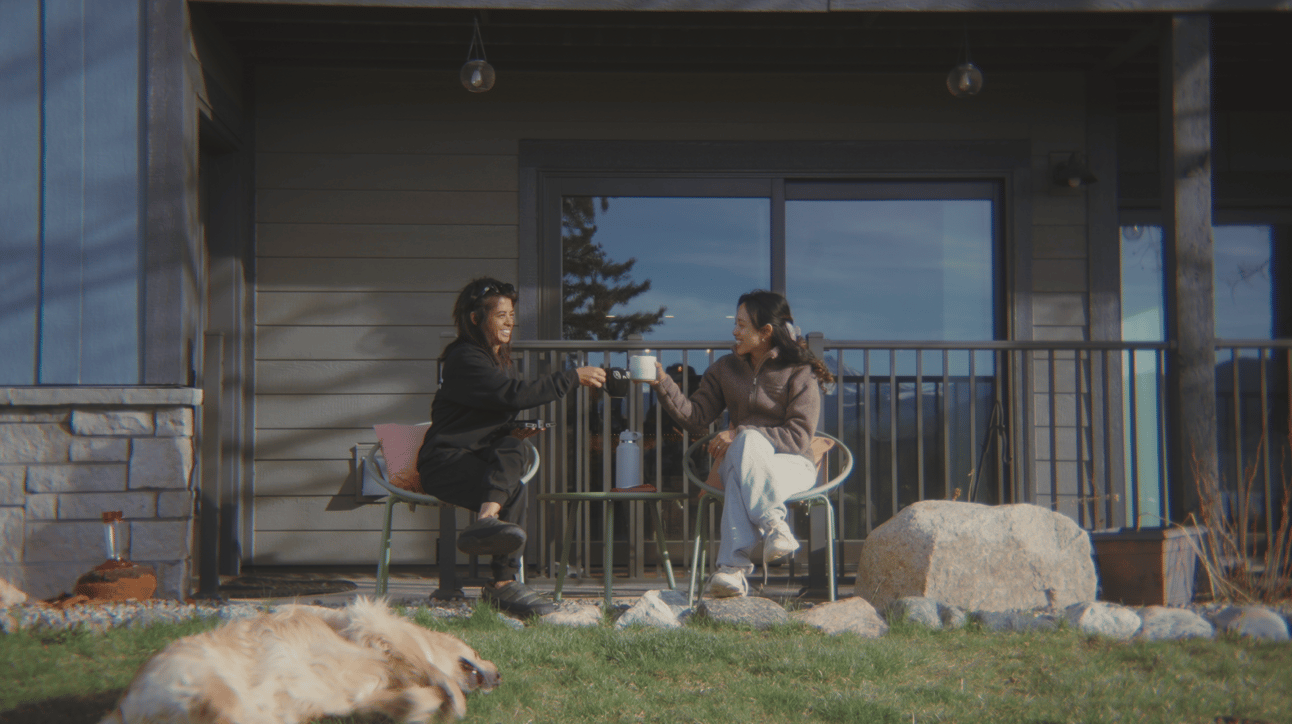
Enjoying coffee with my big sis <3

Came back home with a project to finish for the editor company 👀
And while I was in Denver, my sister told me to read Can’t Hurt Me by David Goggins. And wow. That book altered my brain chemistry. It forced me to take a hard look at myself—and specifically, my lack of discipline. My inability to meet my own deadlines. My constant excuses.
This is actually version two of this newsletter because in the first draft, I blamed Spring for ruining my routine. I literally wrote, “Spring is begging for more of my time.” But let’s be real. It’s not Spring. It’s me. I’ve still been clinging to my soft girl era—and I needed to be there.
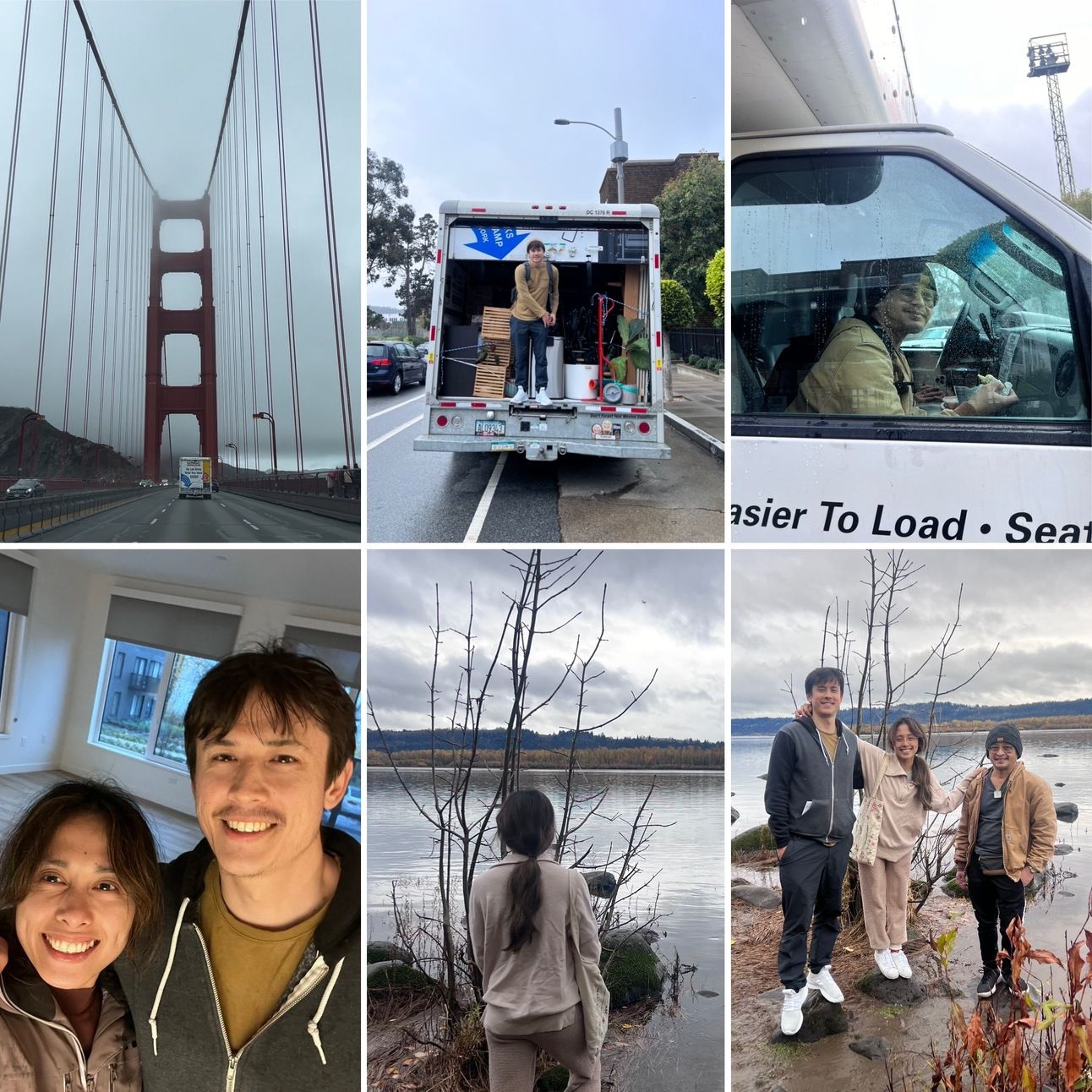
Fun fact: we took a 20+ hour detour to avoid snow—turns out we didn’t even need to.
Last year, I left the Silicon Valley startup life and moved to Washington state with my fiancé. I’ve spent 7 years chasing salaries and shipping fast, so I was burned out and needed to slow down and soften.

Embracing my soft girl, healing era last year
But now—I’m transitioning again. And to break into the film industry? I need to get hard again.
I’ve done this before. When I got kicked out of college for failing CS courses, I didn’t give up. I built a bootcamp called GarageScript with friends. There, I learned how to code and build full-stack apps from dawn to dusk. I was obsessed with becoming a Software Engineer. And now, I need to find that part of me again.

Tries to write code at GarageScript using a big ass screen, ends up with a sore neck instead 😅
Reading Can’t Hurt Me made me realize: I’ve been stopping every time I’m tired. But what if I didn’t? What if I kept going? What if I stopped only when I was done?
That’s my new question.

Ngl, I need reminders.
I’m on week seven of another set of my 66-day habit-building journey, and even though I’ve already let five weeks slip by, I’m still going. I’m experimenting with a David Goggins mindset now. I’m gonna go hard. I’m gonna finish what I start. Even if I’m tired. Even if it means a little less sleep.
It got me to six figures once 👀. Now let’s see what happens when I aim it at the life I actually want 🫡.
movies
One day I’ll go to the Cannes Film Festival. Until then, here are three films premiering there from May 13-24 that I’m dying to see:
The Phoenician Scheme
Directed by Wes Anderson • Release Date in USA: June 6, 2025When a flamboyant billionaire dies in a plane crash, leaving his fortune to his nun daughter, she and her quirky tutor must navigate a treacherous world of tycoons, terrorists, and assassins to secure her inheritance—and uncover her father’s true legacy.
Genre: Whydunit
Sentimental Value
Directed by Joachim Trier • Release Date in USA: TBD
After their mother’s death, two estranged sisters confront their past when their long-absent father, a faded film director, returns with a new project that reopens old wounds—and forces them to reevaluate their family ties and personal identities.Genre: Rites of Passage
Eleanor the Great
Directed by Scarlett Johansson • Release Date in USA: TBDAt 90, Eleanor Morgenstein starts over in New York City after her best friend’s passing. There, she forms an unexpected bond with a 19-year-old student—one that challenges her understanding of age, friendship, and the courage it takes to embrace life’s next chapter.
Genre: Golden Fleece / Buddy Love
P.S. If you’re wondering what those genre labels mean…
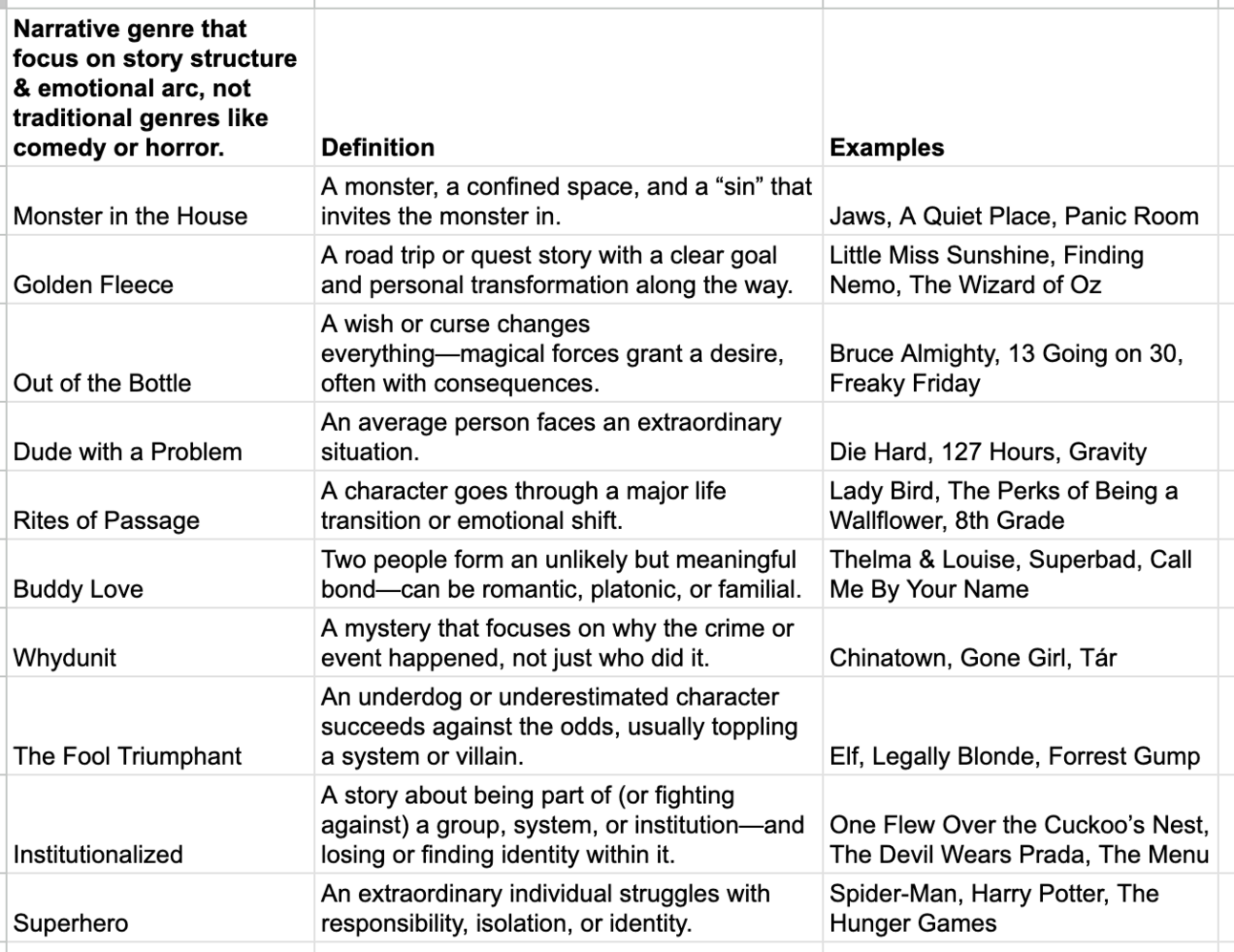
They’re not your typical “comedy” or “thriller” categories. These are storytelling genres from Save the Cat! by Blake Snyder—a book that breaks stories down by emotional journey and structure.
I’m still learning this stuff myself, but I’ve been using these genres to study films more deeply and understand how stories work.
Here’s why I chose them:
The Phoenician Scheme → Whydunit
Why: It’s not a mystery about what happened, but why it happened.
The story unravels motives, secrets, and emotional backstory behind a character’s actions or transformation.
Like The Godfather Part II or Gone Girl, it’s a character study disguised as a revelation.
Sentimental Value → Rites of Passage
Why: It follows a character undergoing an emotional journey through a universal life transition, like grief, growing up, or letting go.
The external plot mirrors an internal change (e.g. healing from loss, rediscovering purpose).
Like Lady Bird or The Pursuit of Happiness, it’s not about achieving something—it’s about becoming someone new.
Eleanor the Great → Golden Fleece
Why: It’s a quest story; a character or group sets out to get something (literally or metaphorically), but what they really find is transformation.
There’s a clear goal, a team, and obstacles that force growth.
Like Little Miss Sunshine or The Wizard of Oz, the journey is what changes them.
If you wanna learn more, here is an overview of all 10 genres:
P.P.S. The full lineup for the 2025 Cannes Film Festival is stacked.
Take a look and pick the top 3 films that speak to you the most—even if you don’t know why yet. Follow your gut. That’s how we train our taste 😛.
steal the frame: greta gerwig & little women
🚨 SPOILER ALERT — pls skip if you haven’t watched Little Women!
about greta

Greta Gerwig directing Lady Bird
Greta Gerwig is one of my favorite filmmakers ever. Her movies feel cozy and cinematic—like something you want to snuggle up with and study. I see parts of myself in her characters, and every story feels personal, relatable, and full of heart.
She grew up in Sacramento, writing in diaries, listening to broadway tapes, and dreaming of being on stage. After getting rejected from every drama school she applied to, she ended up at Barnard College, where she studied English and Philosophy, wrote plays, and led a sketch comedy group.
She got rejected again (this time from playwriting grad schools), but she didn’t stop. Instead, she made her way into the Mumblecore¹ scene—acting in, co-writing and co-directing indie films like Hannah Takes the Stairs and Nights and Weekends. Her big break as a writer came when she co-wrote Frances Ha with Noah Baumbach. From there, she kept writing, kept acting, and slowly carved out her voice behind the camera—until her solo writing and directing debut, Lady Bird, earned five Oscar nominations and established her as a writer-director with a voice that’s both emotionally honest and unmistakably her own.
Then came the movie we’re now talking about—Little Women—a bold and emotional reimagining of a classic that proved Lady Bird wasn’t luck—it was her lane.
In 2023, she made history as the first solo woman director to hit $1 billion at the box office with Barbie. And she did it all without a traditional film school path. Instead, she learned by doing—acting in micro-budget indies, co-writing scripts, and building her voice from the inside out.
Greta’s work is full of heart, humor, and soul. She reminds me that stories rooted in truth—especially girlhood and womenhood—matter. If you’ve ever felt too sensitive, too emotional, or too unsure, just remember: Greta was too. And look what she made 🥹.
¹What is mumblecore?
Mumblecore was a 2000s indie film movement known for low-budget production, naturalistic dialogue, and emotionally grounded stories about love, identity, and the uncertainty of adulthood. Think Frances Ha, The Puffy Chair, or Hannah Takes the Stairs.
It emerged as a response to the polished, high-concept studio films of the time—prioritizing character, mood, and intimacy over plot or spectacle. It was deeply DIY, often made with friends, small crews, and handheld cameras.
Why it matters today:
If you’re someone telling personal stories with a small camera, a tiny crew (or just yourself), and a big heart—you’re carrying on that same spirit. Mumblecore proved you don’t need a big budget to say something real. You just need the guts to make it.
about little women
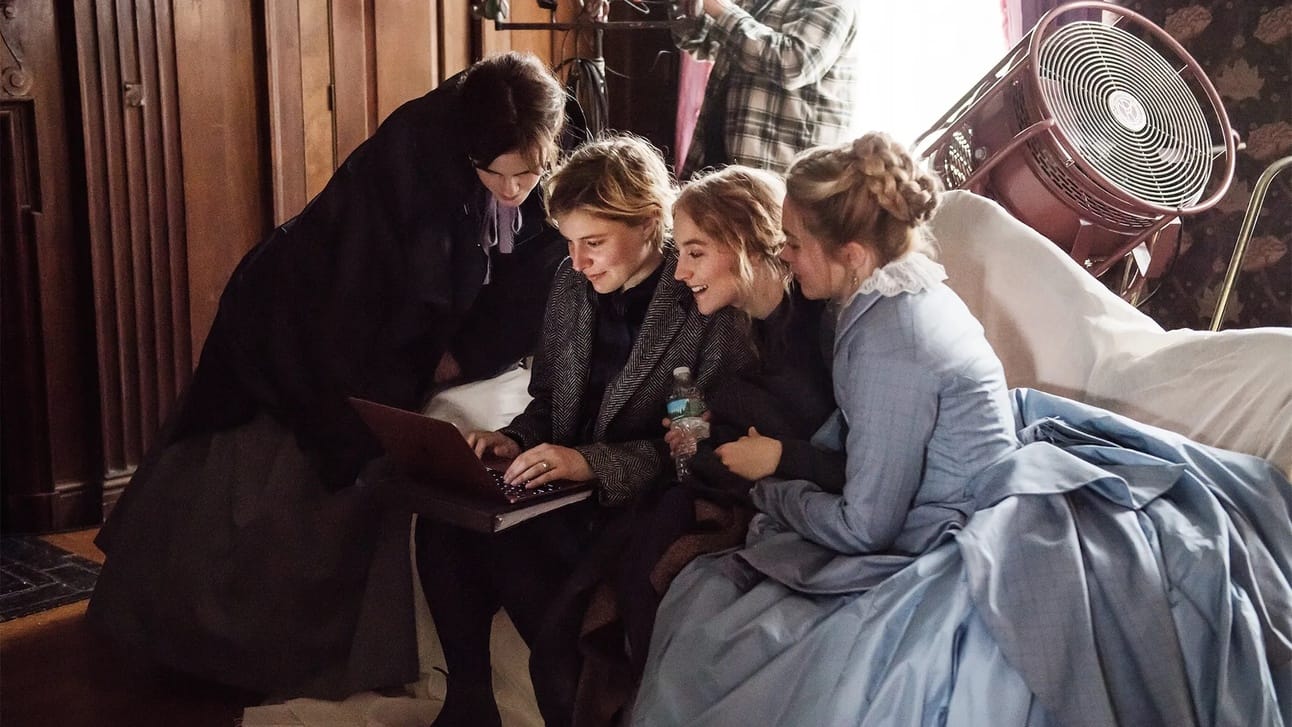
Emma Watson, Greta Gerwig, Saoirse Ronan, and Florence Pugh on the Little Women set
Based on Louisa May Alcott’s 150-year-old novel, Little Women has been adapted more times than we can count—but never like this. Greta Gerwig makes it feel like a memory you lived through, even if you didn’t.
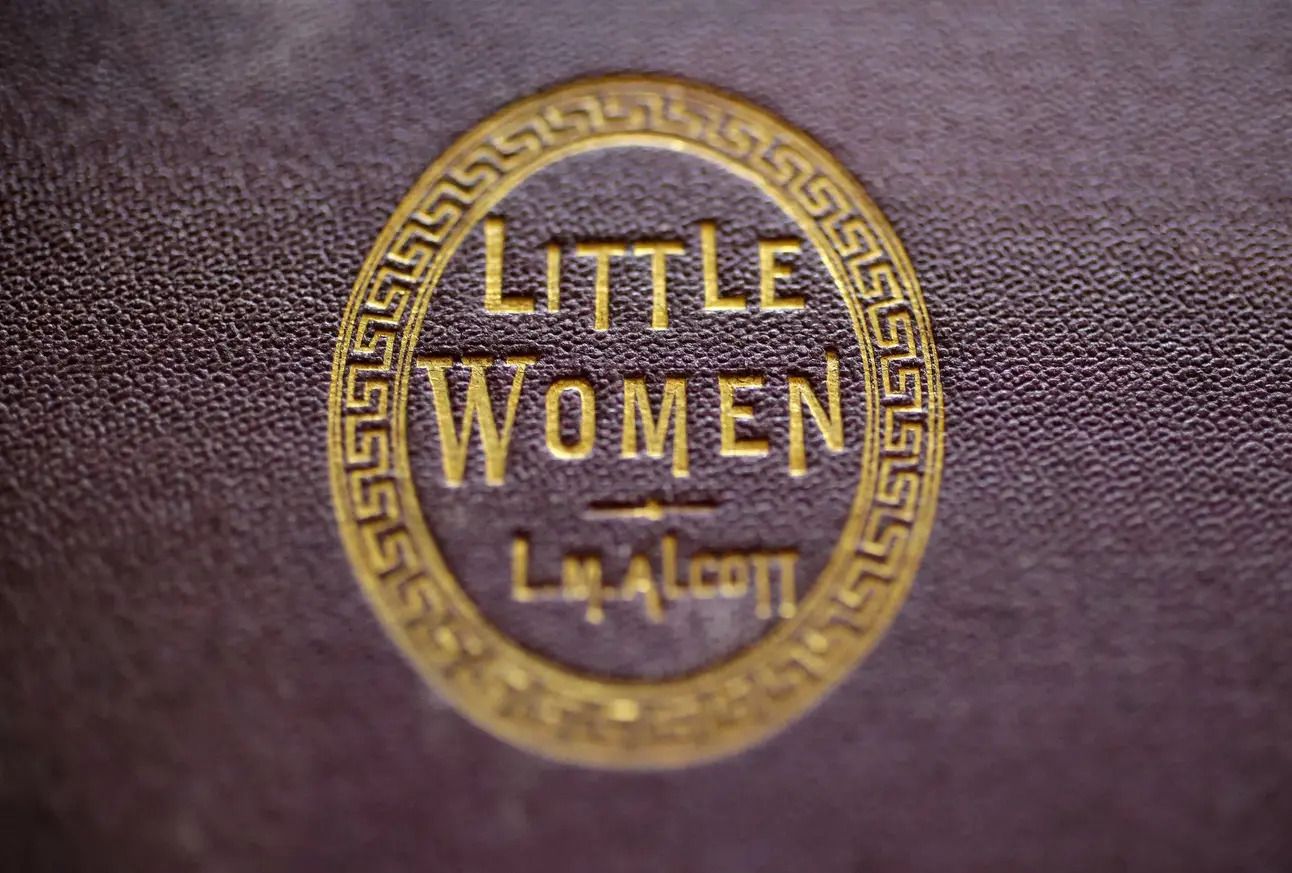
The cover of an 1869 edition of Little Women
It’s the story of four close-knit sisters coming of age after the Civil War, each navigating the tension between duty and desire—love, ambition, grief, and growing up. And after everything they go through, one of them turns their girlhood into a story the world would never forget.
In this Steal the Frame, we’re breaking down my favorite parts of the film:
the dialogue (layered, emotional, and heartbreakingly honest)
the story structure (nonlinear but somehow more real because of it)
and the cinematography (soft, sunlit, and emotionally in motion)
Let’s get into it.
dialogue

One of the things I love most about Greta Gerwig is how much she honors her script. You’d think a lot of the conversations in Little Women were improvised—like the actors were just vibing and bouncing off each other like real-life sisters. But in reality, every single line was scripted. Every single line.
This is what people call layered dialogue—when characters talk over each other, finish each other’s thoughts, interrupt, overlap, and bounce in and out of conversations. It’s messy in the most intentional way. And instead of feeling chaotic, it makes the characters feel real.

Opening scene in Lady Bird
We saw this style in Lady Bird, but in Little Women, it hits different. Maybe because it’s sisters. Maybe because of how fast they talk, how lovingly they argue, how freely they speak in front of each other. Greta once said she had the girls “talk at the speed of life”—which is such a perfect way to describe it. It’s how girls talk. It’s how sisters talk. It’s how we talk.
And because of that, I didn’t feel like I was watching them. I felt like I was with them. Like I grew up with them. Like they were my sisters too.
And then…there are the lines that stop you in your tracks.
One of my favorite moments—probably everyone’s favorite—is when Amy tells Laurie:
“Talent isn’t genius, and no amount of energy can make it so. I want to be great, or nothing.”

That line haunts me. Because it’s so real. Sometimes, at my lowest points, I wonder, “What’s the point of chasing my creative dreams if I’m not going to be great?” The raw truth of that moment sticks. It’s why Little Women still hits today.
And okay, one more—because I can’t help myself.
There’s this moment when Jo is convinced no one would care about a story rooted in domestic struggles and joys, because it doesn’t seem important enough. And Amy says:
“Maybe it doesn’t seem important because people don’t write about them.”

That line always makes me tear up. Because it speaks to the aspiring writer in me who wonders if anyone else has ever felt the way I do. But that’s the power of storytelling: when you write about your experience, you make it matter. You give it shape. You make space for someone else to say, “me too.”
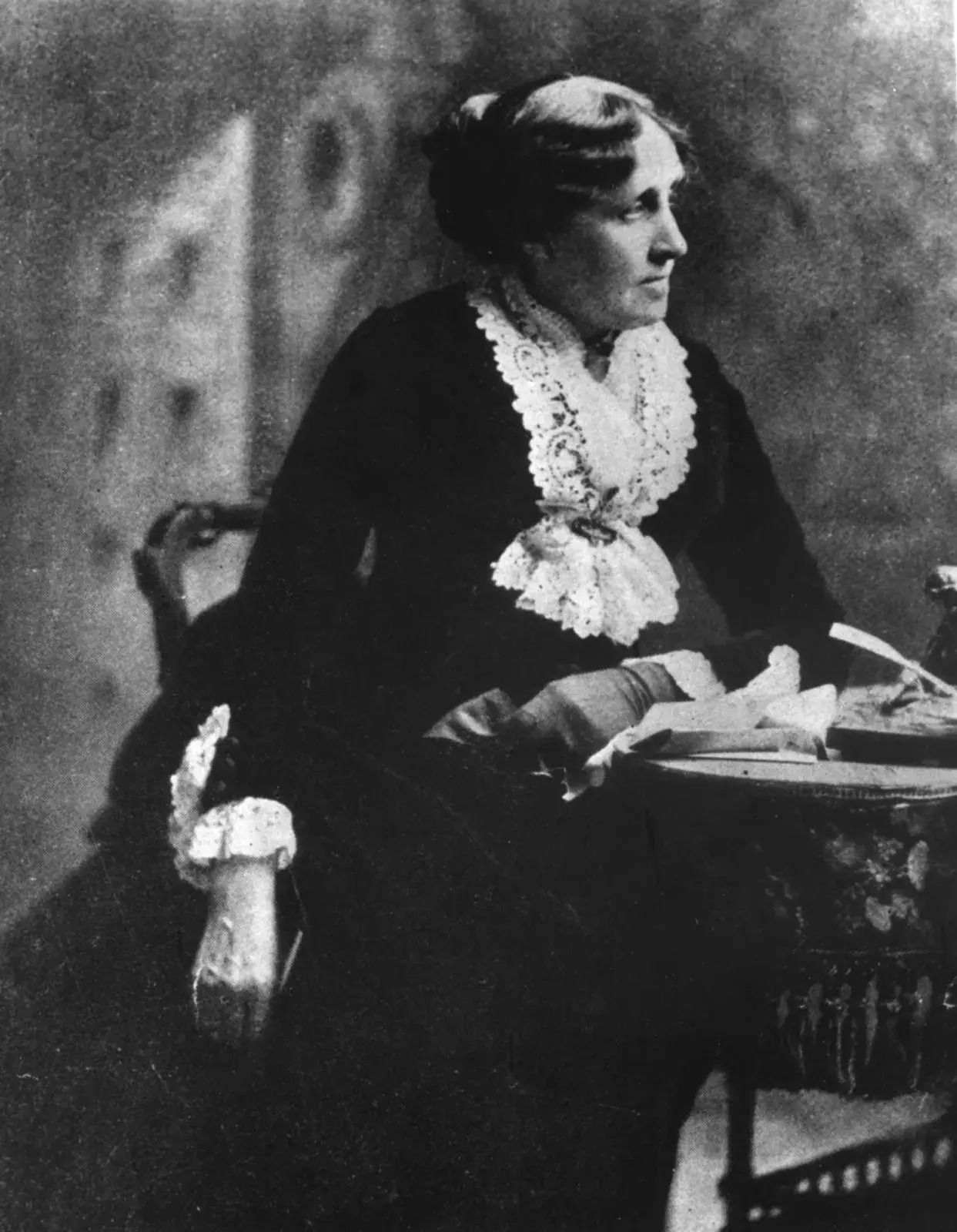
Louisa May Alcott
Huge shoutout to Louisa May Alcott, whose original words still cut deep, 150 freakin’ years later. Gerwig didn’t just write incredible lines—she knew which ones to keep.
what i’d steal:
The intentional messiness. The idea that dialogue doesn’t have to be clean to be clear. It can be loud, chaotic, and full of interruptions—and still be deeply emotional, because that’s how we talk when we’re not trying to sound perfect. That’s how we talk when we really feel something. Also, the reverence for language that already stands the test of time.
story structure
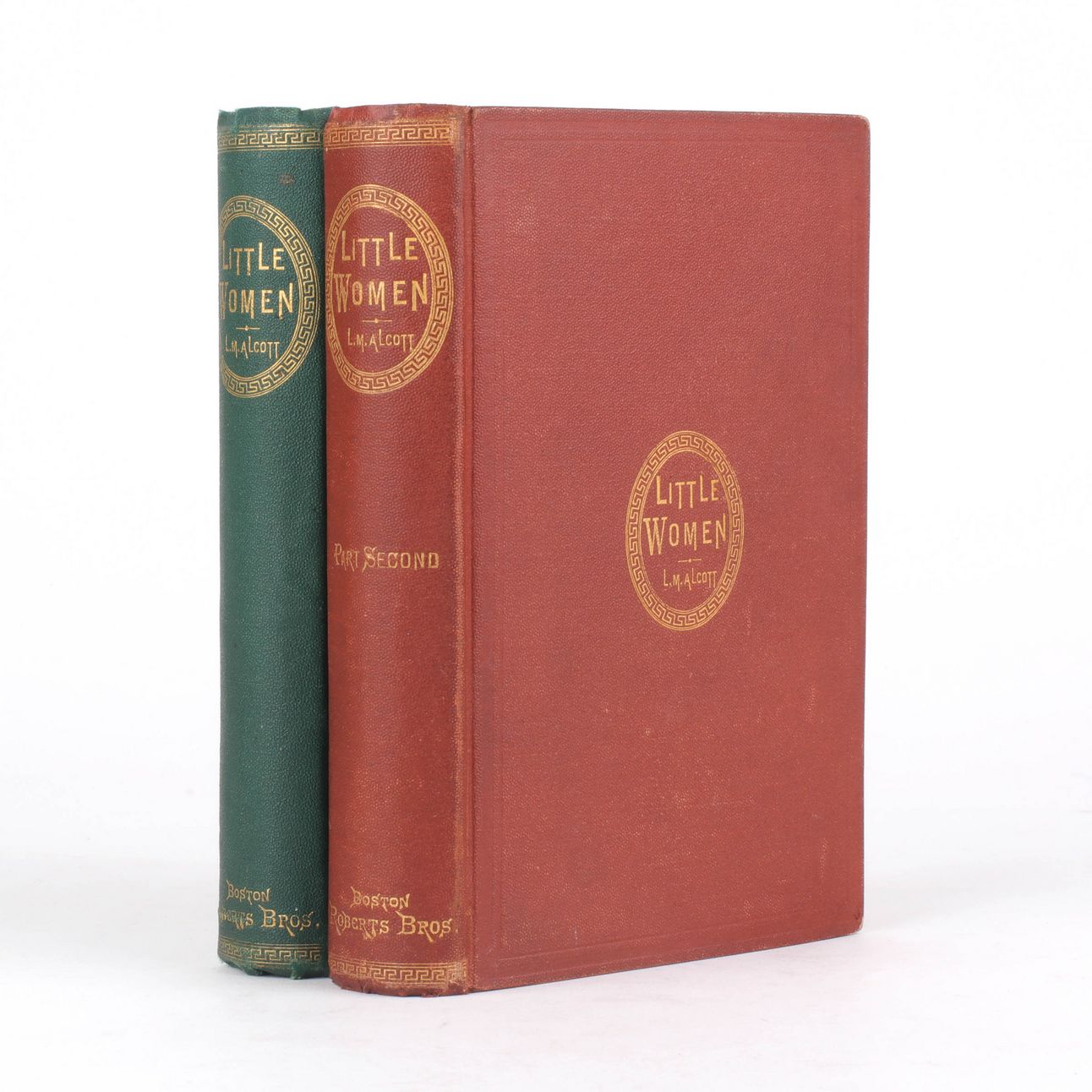
First editions of Little Women
In the original novel, Little Women is split into two parts: childhood and adulthood. Book One follows the March sisters as young girls. Book Two picks up years later, when they’re grown, navigating everything they once dreamed about—or feared.
What I love is how Greta Gerwig didn’t treat those two timelines as separate stories. She wove them together—seamlessly nonlinear. The scenes feel like thoughts and memories in conversation with each other.
Like how Jo talks about needing to earn money for the family because Amy is off in Paris—and the very next scene is Amy in Paris.

Top: Jo mentioning Amy in Paris, Bottom: Amy in Paris
Even though the timelines shift, the transitions feel natural.
One moment you’re watching girlhood unfold—warm, golden, full of possibility—and the next, you’re hit with the colder, more complicated reality of growing up.
One of the most powerful examples: Beth’s childhood illness, which she survives, is immediately followed by a cut to the future—where she doesn’t. The memory of her recovery makes the reality of her death land even harder.
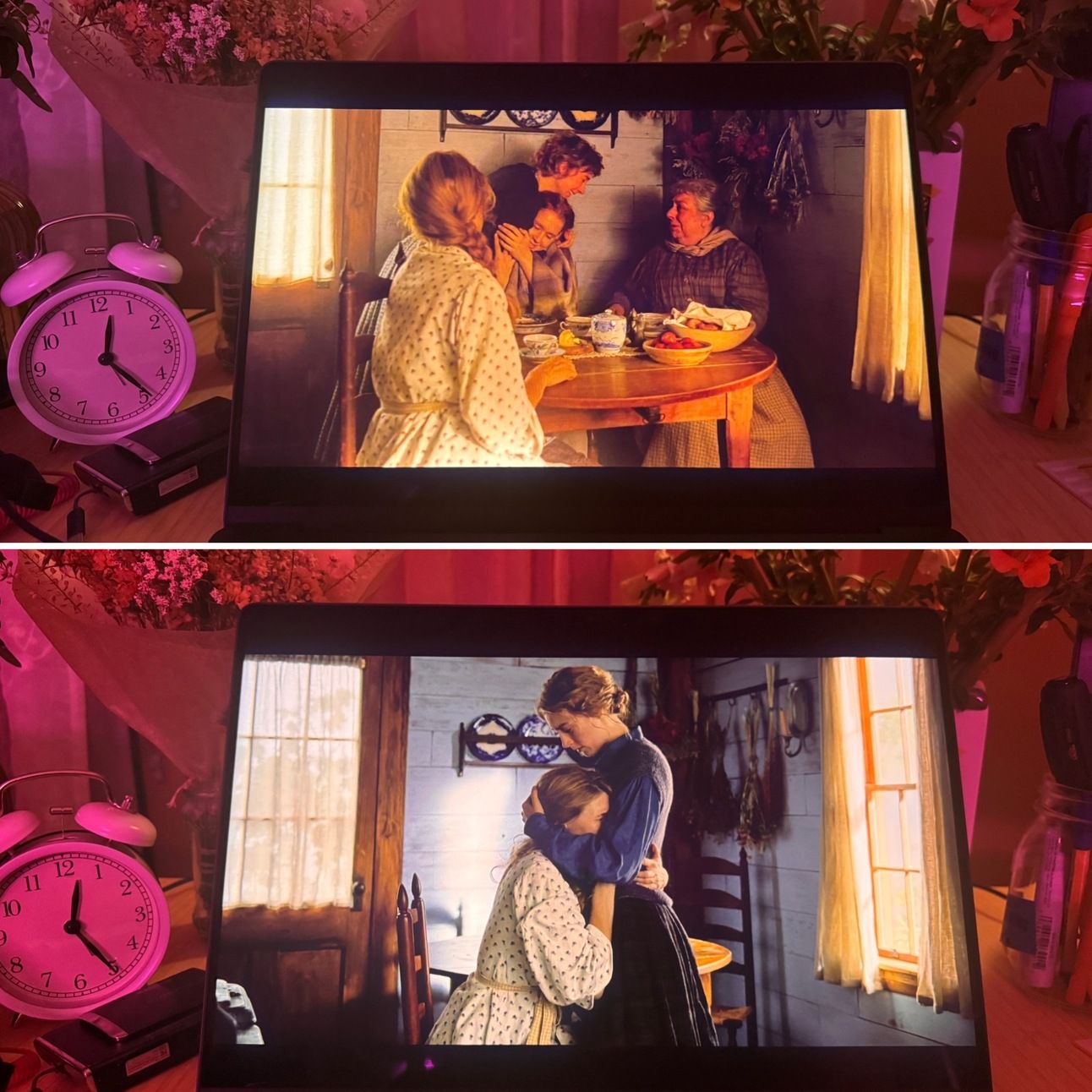
Top: Beth surviving her childhood illness, Bottom: Marmee and Jo mourning Beth
Or when Jo turns Laurie down—he confesses his love, she says no—and the film cuts straight to the future, after Beth’s funeral. Jo, now grieving, tells her mother she wonders if she made a mistake. The shift is quiet but gutting—certainty in one scene, regret in the next.
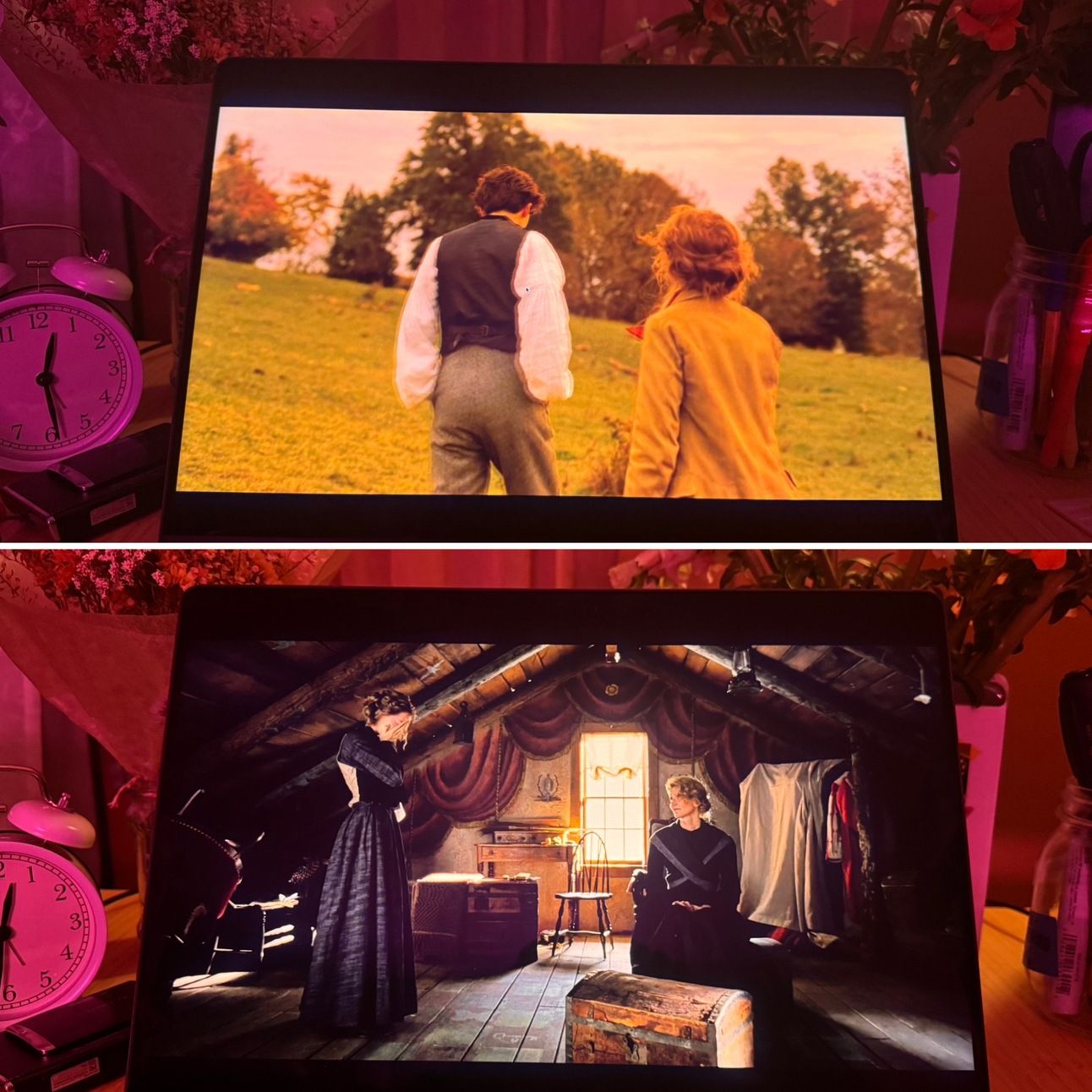
Top: Jo turns Laurie down, Bottom: Jo feeling lonely and regretting her decision
Greta said she was interested in the way our fears and desires as children echo into our adult lives—and this structure makes that connection land emotionally.
And the structure doesn’t just serve emotion—it also explores who’s telling the story. Greta has said she was fascinated by the space between fiction and autobiography. Jo is based on Louisa May Alcott, but she’s also her own character. In Greta’s version, we see Jo writing Little Women inside the story—blurring the line between character, author, and filmmaker. She called it a cubist structure: instead of telling the story from one angle, she shows it from many at once.
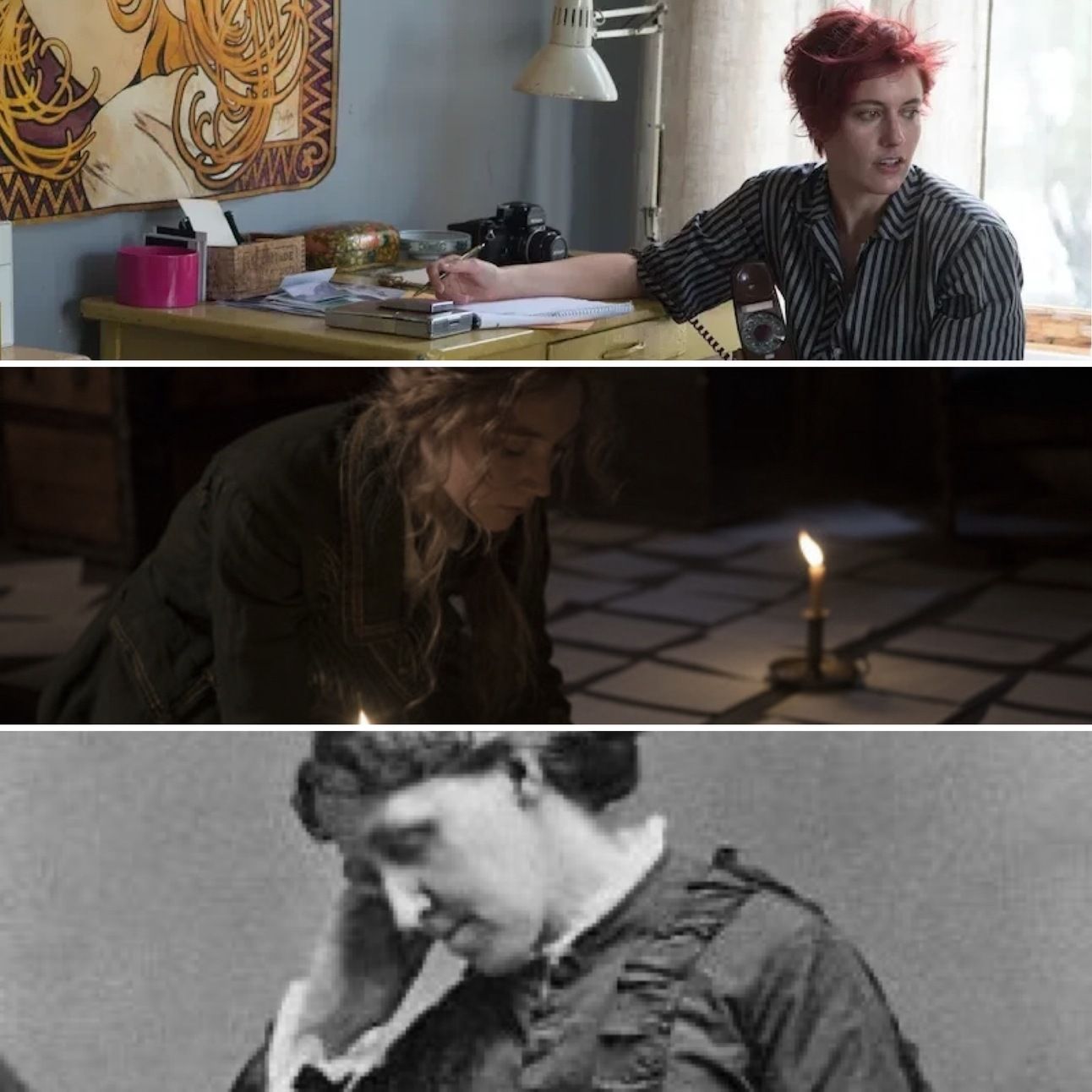
Top: Greta Gerwig, Middle: Jo March, Bottom: Louisa May Alcott
And that’s the beauty of her approach: she wasn’t just adapting a classic—she was reshaping it into something that honored both the writer and every girl who’s ever seen herself in Jo.
She was asking: Who was the woman who wrote this? How can I honor her?
And also—what has this story meant to all the women who saw themselves in it?
From Louisa May Alcott to J.K. Rowling and beyond, Little Women has shaped generations of artists and dreamers. Greta found a way to hold all of that at once.
what i’d steal:
The courage to break a beloved story open and retell it with heart. And the way Greta lets memory—not chronology—move the story forward. It’s not told in order. It’s told the way we remember: in fragments, in feeling.
cinematography

From the very first frame, Little Women feels like stepping into the pages of a cherished, timeworn book. Watching it doesn’t feel like observing a story—it feels like experiencing one, side by side with the characters.

Yorick Le Saux and Greta Gerwig on the set of Little Women (2019)
A big part of that comes from Greta Gerwig’s decision to shoot on 35mm film. She didn’t want digital crispness—she wanted softness, texture, and nostalgia. Her cinematographer, Yorick Le Saux, said film lets you reach out and touch the trees, the shrubs, the skin tones, and you really can. The light, the grain, the warmth—it all feels like memory.

The color grading helps you feel which timeline you’re in:
Girlhood is golden, bright, full of warmth
Adulthood is cooler, quieter, more muted
Then there’s the camera movement, which Greta treated like one of the girls. In childhood, it runs and dances with them. In adulthood, it slows down. It becomes still, steady—more grown up. Greta even called it “sad camera.”

Top: Meg enjoying girlhood, Bottom: Meg facing the weight of adulthood
Lastly, the film is a storybook come to life. Gerwig and Le Saux pulled inspiration from 19th-century art—like Winslow Homer’s beach paintings and Lilly Martin Spencer’s paintings of family and domestic life. Every frame is beautiful but it still feels like home.

Top: On the Beach at Marshfield by Winslow Homer, Bottom: Beach scene in Little Women

Top: The Home Of The Red, White And Blue by Lilly Martin Spencer, Bottom: Final scene in Little Women
what i’d steal:
The choice to treat the camera like a character. Greta didn’t just point and shoot—she choreographed movement to mirror emotion. When the girls are young, the camera plays with them. When they grow up, it steps back and observes. That shift in movement makes you feel the distance between then and now.
Here’s how: Try handheld shots for joy and chaos, slow pans for contemplation, and still frames for grief. Let your camera grow up alongside your characters.
And if you want your film to feel like more than just a movie—look outside of film. Gerwig and Le Saux drew from 19th-century paintings to shape the mood and framing of each shot. You can steal from painters, poets, novels—anyone whose work moves you. Great filmmaking doesn’t start with a camera. It starts with feeling.
story seeker of the week

Suvi Sharma is documenting her journey of building Silvers Wind, a jewelry brand inspired by what she loved as a kid—playing with jewelry. She left corporate, started creating again, and is now building a purpose-driven business that gives 20% of earnings to help girls explore art.
That mission really hit home for me. I kept thinking—what if someone had said to me as a little girl, “You love to write. You should explore that”? One person believing in your creativity can change everything.
I also loveee Suvi’s Pinterest-meets-vlog vibe and how she’s building her brand in public. If you wanna learn how to tell a brand story through vlogs—start with Suvi.
Know someone who embodies the heart of a Story Seeker? Recommend them here and they might be featured in an upcoming newsletter 💗.
helpful links
Sundance 2026 Development Track • Deadline: May 14, 2025 — A single application gets your fiction feature screenplay considered for Sundance’s Screenwriters Lab, Intensive, Sloan Fellowship, and more. If you’re writing your first or second feature, this is the gateway—Sundance offers mentorship, labs, and credibility that can launch your career.
Oregon Film Short Film Grant • Deadline: May 23, 2025 — A grant of up to $7,500 for short films (under 40 mins) that celebrate Oregon’s culture, history, or landscape. Must be Oregon-based and led by filmmakers who’ve lived in Oregon for at least a year. Priority goes to underrepresented voices and rural stories.
Women by Women: A Global Open Call by PhotoVogue • Deadline: June 1, 2025 — A global call for women and non-binary photographers and filmmakers to explore how women see and are seen. Selected artists may be published in Vogue, showcased at PhotoVogue Festival, and awarded up to $6,000. Free to enter.
If this was helpful, pls share your fave part as an IG story and tag @she.films 🥰.
See ya in the next issue,
Mari 🫶🏼